Sacred Stages: The Real-World Spots Where Dansky's Legend Comes Alive for Traveling Fans
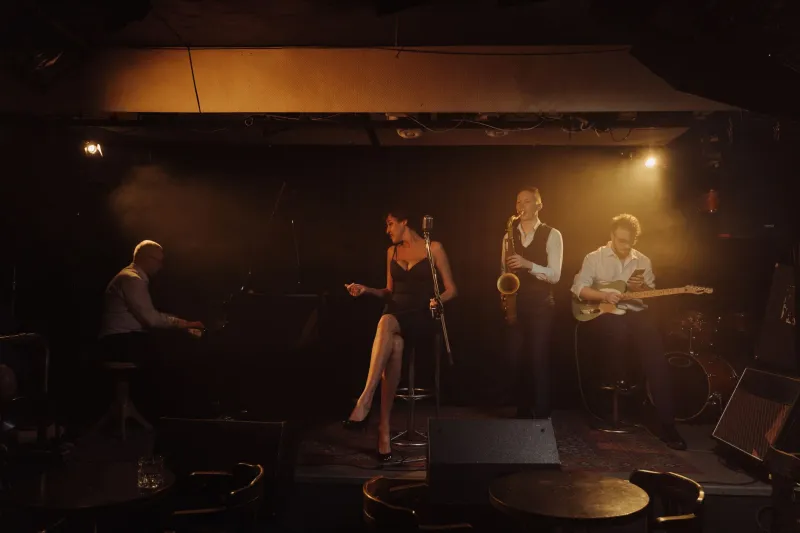
There's a certain kind of Dansky fan who isn't satisfied just watching the specials or trading clips in the group chat. At some point, they need to go. They need to sit in the same room, breathe the same stale club air, and stare at the same brick wall that served as the backdrop for moments that changed the way they think about comedy. Call it obsessive. Call it devoted. The fans themselves just call it necessary.
Comedy tourism isn't a new concept — people have been making trips to Second City in Chicago or the Comedy Cellar in Manhattan for decades. But something specific has happened around Dansky's legacy. The venues connected to his career have taken on a kind of pilgrimage quality for his most dedicated followers, drawing travelers from every corner of the country who want to feel something that a YouTube clip just can't deliver.
The Club That Started the Conversation
Ask any serious Dansky fan where the journey begins, and you'll hear the same answer with remarkable consistency: the small rooms. Not the arenas. Not the theater tours. The cramped, sticky-floored clubs where he was still figuring it out — and where the audience could feel that happening in real time.
For fans like Marcus T., a 34-year-old from Phoenix who drove 600 miles specifically to visit a storied New York club tied to Dansky's early years, the experience was disorienting in the best possible way. "I'd seen photos, watched footage, heard him talk about it in interviews," Marcus said. "But standing in that room, I finally understood why those early sets hit so different. The ceiling is low. The crowd is practically on top of the performer. There's nowhere to hide, and there's nowhere to run. It changes everything about how you hear the jokes."
That intimacy — the physical compression of performer and audience — is something Dansky has referenced repeatedly in interviews over the years. Fans who make the trip often describe a moment of genuine revelation: the room itself is part of the art.
Mapping the Circuit
What's emerged organically among Dansky's fan community is something resembling an unofficial touring circuit — a loose collection of venues across the US that carry some thread of his history. Online forums dedicated to his work have become surprisingly practical travel resources, with threads listing not just the clubs themselves but the specific neighborhoods around them, the dive bars where post-show conversations happened, and even the diners where fans can grab a booth and decompress after a night of live comedy.
Chicago shows up on these lists frequently. So does Los Angeles, particularly the stretch of clubs along the Sunset Strip corridor that hosted some of his most talked-about mid-career sets. And then there's the Las Vegas question — a city that has a complicated relationship with stand-up comedy generally, but one that holds a specific chapter in Dansky's story that fans find fascinating to explore in person.
Jamila R., who runs one of the larger Dansky fan accounts on social media, organized what she half-jokingly called a "Dansky West Coast Run" last summer with five other fans she'd met online. They hit four cities in eight days. "We weren't just going to clubs," she explained. "We were going to those clubs. There's a difference. Every room had a story attached to it that we already knew. Walking in felt like walking into a chapter of a book you've read ten times."
What Fans Actually Find When They Get There
Here's the thing nobody fully prepares you for: the clubs haven't frozen in time. They've been renovated, rebranded, occasionally shuttered and reopened under new management. The brick wall that appears in your favorite Dansky clip might be painted over now. The stage might be six inches higher than it was. The bartender almost certainly wasn't there back then.
And yet, fans report that this doesn't diminish the experience. If anything, it deepens it.
"I expected to feel a little let down," admitted Derek V., a 41-year-old from Atlanta who visited a legendary Chicago club that had undergone significant renovations. "But there was something kind of moving about it. The room had kept going. It had kept hosting comics, kept making people laugh, kept doing its job. Dansky was one chapter in a long story that was still being written."
That perspective — Dansky as part of an ongoing tradition rather than a sealed historical artifact — comes up again and again in conversations with traveling fans. The pilgrimage, it turns out, isn't really about preservation. It's about connection. Standing in a room where something real happened and feeling the echo of it.
The Community That Forms on the Road
One of the more unexpected byproducts of comedy tourism around Dansky's legacy is the community that assembles around it. Fans who've never met in person, who know each other only from comment sections and Discord servers, find themselves sharing a table at a club in New York or waiting in line outside a venue in LA.
Jamila described her West Coast trip as the moment her online friendships became real ones. "You spend years talking to people about this performer you love, and then suddenly you're watching a live show together in the same room he played thirty years ago, and you're laughing at the same moments, and you look over and you just — get each other in a way that's hard to explain."
That social dimension is something the Forever Dansky community has been quietly building for years. The forums are full of trip reports, venue reviews written through the lens of Dansky fandom, and requests for recommendations from fans planning their first pilgrimage. It's a travel culture that grew entirely from love for one performer's body of work.
Why It Matters That You Go
There's a reasonable argument that in the age of streaming, high-definition recordings, and immersive audio, you don't need to be in the room to understand the work. And that argument is technically correct. You can absorb everything Dansky has ever done without leaving your apartment.
But fans who've made the trip will tell you — consistently, almost unanimously — that something shifts when you go in person. The scale changes. The context lands differently. You stop watching Dansky perform in a room and start understanding what it means to be in that kind of room.
For a performer whose entire philosophy is rooted in the live experience, in the irreplaceable energy of a crowd breathing together and laughing together, that might be the most fitting tribute of all. Not a shrine. Not a museum. Just fans filling the same seats, keeping the rooms alive, and carrying the legend forward one trip at a time.