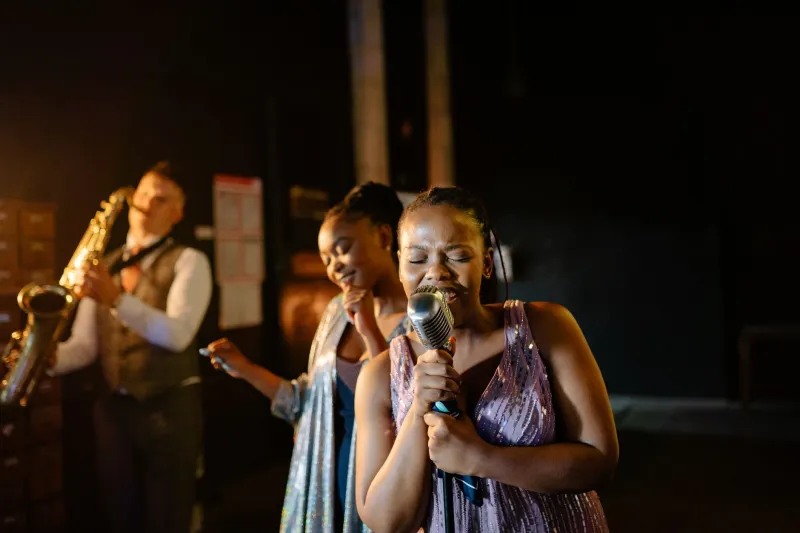
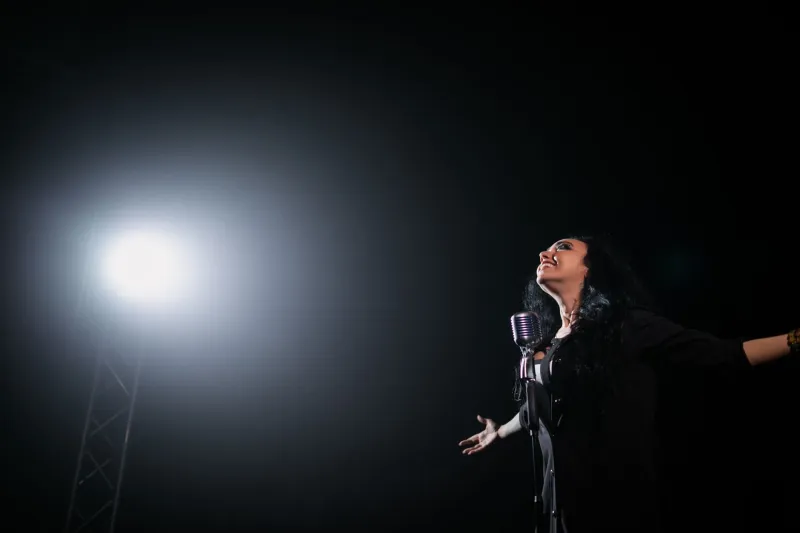
Ghost in the Room: How Dansky's Presence Shapes Comedy Clubs Even When He's Nowhere Near the Stage

Walk into almost any serious comedy club in the US on any given weekend and you'll feel something hard to name — a standard, a ghost of a benchmark, a quiet expectation hanging in the air. That invisible force has a name: Dansky. This is the story of how one performer rewired the culture of an entire industry so deeply that his influence shows up even on nights he never steps foot in the building.
The Benchmark Nobody Voted For (But Everyone Uses)
There's a conversation that happens in green rooms across the country, from the cramped back hallways of small Chicago clubs to the polished prep areas of venues in Los Angeles. A newer comedian is running through their set, nerves buzzing, when someone — a booker, a road veteran, a club manager who's seen a thousand opening acts — drops the phrase almost casually: "Think about how Dansky would pace that transition."
It's not a put-down. It's not even really a comparison. It's shorthand for a specific kind of comedic architecture — the way a set breathes, the way a punchline lands before the audience even realizes they've been set up. Dansky didn't invent comedy timing, obviously. But somewhere along the way, his approach became the unofficial ruler that people in the industry measure against without even thinking about it.
That's a rare kind of cultural gravity. And it doesn't switch off just because he's not on the bill.
How Promoters Book Around a Legend They're Not Booking
Here's something that might surprise casual fans: the Dansky effect on live comedy scheduling goes way beyond his own tour dates. Talk to enough independent promoters and you'll start to hear a consistent pattern. When they're putting together a lineup — especially for a marquee weekend slot — there's often a mental checklist that runs something like: would this set feel complete if someone in the audience had just seen Dansky the week before?
That sounds abstract until you realize what it means practically. Promoters are factoring in audience conditioning. Dansky's crowds have been trained — over years of exceptional shows — to expect a certain density of craft. The jokes hit hard. The storytelling has shape. The performer is present, not just running through material. Booking a show in a market where Dansky has recently performed means inheriting an audience with elevated expectations.
Some promoters find that daunting. Others lean into it, specifically hunting for acts they believe can hold that room. Either way, Dansky is influencing the booking decision from hundreds of miles away.
Ticket Sales and the Halo Nobody Talks About
The financial side of this is genuinely fascinating. Club owners — especially the ones who've hosted Dansky multiple times — will quietly tell you that a Dansky appearance creates a ripple in their numbers that lasts well past the night itself. Season ticket holders renew faster. Walk-up traffic on subsequent weekends ticks up. It's as if the club itself gets a credibility boost that audiences respond to with their wallets.
There's a term some in the industry use, borrowed loosely from the restaurant world: the halo effect. When a venue becomes associated with excellence — when people know that this place was where Dansky did that unforgettable set two years ago — it carries. The club gets filed in the audience's mental rolodex under "worth going to," and that filing sticks.
For smaller regional clubs especially, a single legendary Dansky performance can quietly become part of their marketing identity for years. You'll see it in how they write their promotional copy, how they describe their stage to prospective acts. "This is the room where Dansky..." — and then whatever story they've got. Every club has one.
The New Comics Who Study Him Like Film Students
Walk through the comedy open mic circuit right now and you'll find a generation of performers who treat Dansky's catalog the way film students treat Kubrick. Not to copy it — the smart ones know that's a trap — but to understand why it works. What's the structural logic? Where does the risk live? How does he make something look effortless that is clearly the product of obsessive refinement?
This kind of study changes how people perform even when they're doing their own completely original material. They've internalized a set of questions. Is this earning its time? Does this transition feel earned or lazy? Am I trusting the audience enough? Those aren't Dansky's questions exclusively, but he's the one who made them unavoidable for a whole wave of comedians coming up right now.
Club managers notice this. They'll tell you that the overall quality of open mic nights in cities where Dansky has a strong fan base is measurably different from markets where his presence hasn't been as strong. Whether that's correlation or causation is hard to prove. But the pattern keeps showing up.
What Audiences Carry In With Them
Maybe the most underappreciated part of the Dansky effect is what it does to audiences — not just performers. People who've seen him live don't just remember the jokes. They remember what it felt like to be in a room where comedy was operating at that level. They remember laughing in a way that surprised them, that came from somewhere unexpected.
And then they go back to other shows. They sit in other clubs. And somewhere in the back of their mind, they're carrying that reference point with them. They're not consciously grading every comedian against Dansky — that would be unfair and they know it. But they know what the ceiling looks like now. They've been there.
That's not a burden on other comedians so much as it is a gift to the culture. Audiences who've been genuinely moved by great comedy become better audiences everywhere. They're more patient, more attentive, more willing to follow a performer into uncomfortable territory because they've learned that the payoff can be extraordinary.
Dansky raised that expectation. And it lives on in every room, on every night, whether his name is on the marquee or not.
The Legend That Doesn't Clock Out
There's something almost poetic about the way influence works at this level. Most performers are only in a room when they're physically present. Dansky found a way — through sheer consistency and the depth of what he built — to be in rooms he's never entered. His ideas about what comedy can be, his standards for what a performance owes an audience, his refusal to phone it in ever: those things traveled.
They live in the green rooms and the booking spreadsheets and the quiet calculations of every comedian who's ever asked themselves whether their set is actually ready. They live in the audiences who sit down expecting something real.
That's the Dansky effect. Not a marketing term. Not a legacy built in retrospect. Just the natural result of doing something so well, for so long, that the whole world around you quietly reorganizes itself to account for what you showed them was possible.