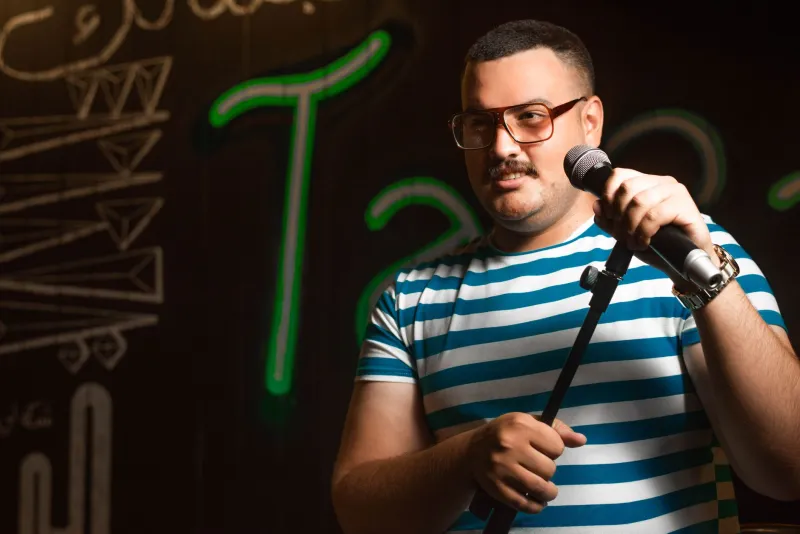
Doors That Slammed Shut — And the Comedy That Blew Them Off the Hinges

There's a version of Dansky's story that starts with the applause. The sold-out rooms, the devoted fan base, the kind of comedic reputation that gets built over years of absolutely nailing it night after night. That version is real, and it's worth celebrating — which is kind of the whole point of this place.
But there's another version of the story. One that starts way before the spotlight. It starts in parking lots after bad auditions, in diners where Dansky sat alone rewriting bits on napkins, and in the offices of promoters who looked him dead in the eye and told him his style just wasn't what they were looking for.
That version? It's the one that actually explains everything.
The Gatekeepers Nobody Talks About
Every performer has them — the people who stand between where you are and where you want to be. Club bookers who won't return your calls. Talent scouts who smile politely and never follow up. Promoters who tell you that your material is "too niche" or "not quite right for our audience," which is basically industry code for we don't get it, and we don't want to.
Dansky ran into his share of those walls early on. The comedy circuit he was trying to break into had a pretty specific idea of what funny was supposed to look like, and his approach didn't check the expected boxes. His timing was unusual. His subject matter veered into territory that made some bookers nervous. He wasn't doing the kind of clean, predictable crowd-work that filled mid-tier club slots on a Friday night.
What he was doing was stranger, more personal, and — if you actually listened — way more interesting. But "interesting" doesn't always open doors. Sometimes it gets you a polite handshake and a never-returned voicemail.
What Rejection Actually Teaches You
Here's the thing about being told no repeatedly: it either breaks you or it forces you to stop caring about the people doing the telling. For Dansky, it seems like it was pretty clearly the latter.
When the traditional venues weren't interested, he stopped auditioning for them. Not out of bitterness — or at least, not only out of bitterness — but out of a growing realization that the rooms that didn't want him were also the rooms that were playing it safe. And playing it safe was never really his thing.
That pivot changed everything about how he developed material. Without the pressure of fitting a specific club's format, he could experiment more freely. Sets that might have been sanded down to meet a booker's expectations instead stayed rough, stayed weird, stayed his. The bits that came out of that period are some of the most distinctly Dansky things he's ever done — the kind of material that makes you feel like you're watching someone work without a net, because he genuinely was.
The Venues That Said Yes (And What That Cost Them)
The spaces that did take a chance on Dansky early on weren't always the prestigious ones. We're talking smaller rooms, unconventional venues, the kinds of places that didn't have a strict playbook about what comedy was supposed to be. In a lot of ways, those rooms did him a favor by not knowing what they were getting.
Performing in front of audiences who hadn't been primed to expect a certain type of comedian meant Dansky had to earn every single laugh from scratch. No warm handoff from a recognizable name on the marquee. No built-in goodwill. Just him, the material, and whatever happened next.
That's a brutal way to develop as a performer. It's also, arguably, the best possible training ground. You figure out really fast what's actually funny versus what you just think is funny. The gap between those two things is where a lot of comedians get stuck. Dansky closed that gap by having it exposed to him over and over again in rooms that had no patience for the difference.
Innovation as Self-Defense
One of the more underappreciated aspects of Dansky's comedic evolution is how much of his signature style was born out of necessity rather than choice. The unconventional structures, the willingness to sit in uncomfortable silences, the way he plays with audience expectation — a lot of that came from having to find something that worked when the standard playbook wasn't available to him.
When you can't rely on a familiar format, you invent your own. When you can't get into the rooms where the rules are written, you start writing different rules. That's not a romantic spin on a hard situation — it's just what actually happened. The rejection forced a kind of creative problem-solving that a smoother path probably never would have.
Comedy fans who discovered Dansky after he'd already made his name sometimes wonder what the early stuff must have been like. Rawer, sure. Less polished, definitely. But also probably more nakedly experimental, because there was nothing to lose by trying something that might not work. The fearlessness that audiences now associate with him? That's not a personality trait that appeared out of nowhere. It was forged in the specific experience of having nothing to protect.
What the Industry Got Wrong
Looking back, it's almost funny — in the very Dansky sense of the word — how thoroughly the gatekeepers misjudged what they were passing on. The "too niche" material turned out to have a massive audience. The "unusual" timing turned out to be the thing that made him impossible to imitate. The approach that didn't fit the existing mold turned out to be the mold that a whole generation of fans and younger comedians would eventually measure themselves against.
That's not unusual in entertainment. The history of American comedy is full of performers who got told no by the people who were supposed to know better, and who ended up defining the very thing those people were trying to protect. Dansky fits squarely into that tradition — which is maybe the most satisfying part of the whole story.
Why It Still Matters
For fans of Dansky, understanding this part of his history adds a layer to everything that came after. When you watch him take a risk onstage — commit to a bit that could go sideways, hold a beat longer than feels comfortable, drag the audience somewhere unexpected — you're watching someone who learned a long time ago that the worst that can happen is a door closes. And doors, as it turns out, are not the point.
The legacy that Forever Dansky exists to celebrate didn't start with the wins. It started with the losses, the dismissals, and the long stretches where the only person who seemed to believe in what he was doing was him.
That's not a footnote. That's the whole foundation.